If you’re wondering how long to cook salmon in air fryer at 375, you’re choosing a slightly gentler temperature that’s perfect for delicate glazes, thick fillets, and when you want more control over the cooking process. While 400°F is the most popular temperature for air fryer salmon, 375°F offers distinct advantages that make it worth considering.
This comprehensive guide will tell you exactly how long to cook salmon at 375 in air fryer, covering every scenario and explaining when this temperature is actually your best choice.
Quick Answer: Salmon Cook Time at 375°F
For fresh salmon at 375°F:
- Thin fillets (½-¾ inch thick): 7-8 minutes
- Medium fillets (1 inch thick): 9-11 minutes
- Thick fillets (1½ inches thick): 12-14 minutes
For frozen salmon at 375°F:
- Add 2-4 minutes to fresh times
- Thin: 10-11 minutes
- Medium: 12-14 minutes
- Thick: 14-16 minutes
Target internal temperature: 145°F (fully cooked) or 135-140°F (medium)
Key difference from 400°F: Takes 1-3 minutes longer but offers more control and less risk of burning.
Why Choose 375°F for Air Fryer Salmon?
Before diving into specific salmon cook time at 375 air fryer, let’s understand when and why you’d choose this temperature over the standard 400°F:
Best Situations for 375°F:
✅ Sweet glazes – Honey, maple syrup, or teriyaki won’t burn
✅ Thick fillets – More even cooking from edge to center
✅ Delicate preparations – Better for first-time air fryer users
✅ Multiple batches – Less risk of overcooking
✅ Sensitive seasonings – Garlic and herbs won’t char
✅ High-fat salmon – King or Atlantic salmon won’t render too fast
✅ Skinless fillets – Extra protection from drying out
✅ Kids’ meals – Gentler cooking for picky eaters
Advantages of 375°F:
Temperature Control:
- Larger window for perfect doneness
- Less risk of overcooking
- Extra 1-2 minutes before burning
Better for Beginners:
- More forgiving timing
- Easier to check without overcooking
- Less stressful
Glaze-Friendly:
- Sugar-based glazes caramelize without burning
- Can apply glaze at start
- Better for sticky sauces
Even Cooking:
- Center and edges cook more evenly
- Better for thick fillets (1.5+ inches)
- Less dried-out edges
When to Use 400°F Instead:
❌ When you want maximum crispy exterior
❌ For very thin fillets (cook too slowly at 375°F)
❌ When speed is most important
❌ For simple salt-and-pepper preparations
Timing Chart: How Long to Air Fry Salmon at 375
Fresh Salmon at 375°F (Detailed Breakdown)
| Fillet Thickness | Cook Time | Check At | Internal Temp | Best For |
|---|---|---|---|---|
| ½ inch | 7-8 min | 6 min | 135-145°F | Tail pieces, thin cuts |
| ¾ inch | 8-9 min | 7 min | 135-145°F | Standard grocery fillets |
| 1 inch | 9-11 min | 9 min | 135-145°F | Most common thickness |
| 1¼ inch | 11-13 min | 10 min | 135-145°F | Premium center cuts |
| 1½ inch | 12-14 min | 11 min | 135-145°F | Extra thick fillets |
| 2 inch | 15-18 min | 14 min | 135-145°F | Very thick (rare) |
Important Note: At 375°F, timing is slightly more flexible than at 400°F. Being 1 minute over isn’t as critical.
Comparison: 375°F vs 400°F Cook Times
For 1-Inch Salmon Fillet:
| Temperature | Cook Time | Texture | Risk Level |
|---|---|---|---|
| 375°F | 9-11 min | Tender, moist | Low risk |
| 400°F | 8-9 min | Crispy exterior | Medium risk |
| Difference | +1-2 min | Less crispy | More forgiving |
For Thick Fillets (1½ inch):
| Temperature | Cook Time | Even Cooking | Notes |
|---|---|---|---|
| 375°F | 12-14 min | Excellent | Recommended |
| 400°F | 10-11 min | Good | May have cold center |
| Difference | +2-3 min | Better at 375°F | Worth the wait |
Frozen Salmon at 375°F
Direct Cook from Frozen:
| Fresh Thickness | Frozen Time at 375°F | Comparison to 400°F |
|---|---|---|
| ½-¾ inch | 10-11 min | +1 min vs 400°F |
| 1 inch | 12-14 min | +1-2 min vs 400°F |
| 1½ inch | 14-16 min | +1-2 min vs 400°F |
Two-Step Method at 375°F:
- Step 1: Thaw at 360°F for 7 minutes
- Step 2: Cook at 375°F for fresh times above
- Total time: 16-21 minutes
Why use 375°F for frozen?
- Less risk of burning exterior while center thaws
- More even temperature throughout
- Better for thick frozen fillets
Salmon Bites/Cubes at 375°F
1-Inch Cubes:
- Fresh: 6-8 minutes (flip at 3-4 minutes)
- Frozen: 9-11 minutes (flip at 5 minutes)
Note: Cubes cook relatively quickly even at lower temp.
Step-by-Step: How to Cook Salmon in Air Fryer at 375°F
For Standard 1-Inch Fillet (Total: 9-11 minutes)
Preparation Phase (3-5 minutes):
Minutes 0-2:
- Remove salmon from refrigerator
- Pat completely dry with paper towels (crucial!)
- Measure thickness at thickest point
- Let sit at room temp while preheating
Minutes 2-5:
- Preheat air fryer to 375°F (3-5 minutes)
- While preheating, prepare your seasoning or glaze
- Spray basket with cooking spray or line with foil
- Season salmon generously
Cooking Phase (9-11 minutes at 375°F):
Minute 0:
- Place salmon in basket, skin-side down
- Ensure fillets aren’t touching (leave 1 inch between)
- Close air fryer
- Set timer for 9 minutes (minimum time for 1-inch)
Minutes 0-9:
- Don’t open air fryer
- Resist urge to check
- Let the magic happen
Minute 9:
- CHECK TIME!
- Insert instant-read thermometer in thickest part
- Should read 130-140°F
Minutes 9-11 (if needed):
- If temp is 125°F or below, add 2 more minutes
- If temp is 130-135°F, add 1-2 minutes
- If temp is 135-140°F, remove now (will rise to 145°F)
- If temp is 140°F+, remove immediately
Resting Phase (3-5 minutes):
Minutes 0-5:
- Transfer salmon to serving plate
- Don’t cut into it yet!
- Let rest 3-5 minutes
- Internal temperature will rise 5-10°F
- Final temp should reach 145°F
- Juices redistribute for perfect texture
Total Time: 15-21 minutes from start to finish
Visual Timeline: What Salmon Looks Like at 375°F
Understanding the visual progression helps you know how long salmon takes in air fryer at 375:
At 3 Minutes (All Thicknesses)
Visual:
- Surface beginning to dry
- No color change yet
- Still raw appearance
What’s happening:
- Exterior heating gently
- Center still cold
- Moisture evaporating
Action: Don’t open – too early
At 6 Minutes (Thin Fillets)
Visual:
- Very light golden color starting
- Edges beginning to whiten
- Top losing translucent look
Temperature:
- Thin fillets: 120-130°F
- Thick fillets: 80-100°F
Action:
- Check thin (½-¾ inch) fillets now
- Too early for thick fillets
At 9 Minutes (Medium Fillets)
Visual:
- Light golden brown developing
- Edges opaque and slightly firm
- Center becoming opaque
Temperature:
- 1-inch fillets: 130-140°F (check now!)
- 1½-inch fillets: 110-120°F (needs more time)
Action:
- Check 1-inch fillets with thermometer
- Remove if 135°F+ (will rise to 145°F)
At 11 Minutes (All Standard Fillets)
Visual:
- Golden brown on top
- Flakes beginning to form
- White protein (albumin) may appear slightly
Temperature:
- 1-inch fillets: Should be 140-145°F
- 1½-inch fillets: 130-140°F
Action:
- Most 1-inch fillets done
- Thick fillets need 1-3 more minutes
At 13-14 Minutes (Thick Fillets)
Visual:
- Well-browned exterior
- Clearly defined flakes
- Fully opaque throughout
Temperature:
- 1½-inch fillets: 140-145°F
Action: Remove immediately if at temp
Key Visual Differences at 375°F vs 400°F:
At 375°F:
- Lighter, more golden brown (not dark)
- Less dramatic color change
- More even coloring throughout
- Less white albumin protein
- Gentler appearance
At 400°F:
- Darker, more caramelized brown
- More dramatic browning
- Crispy, darker edges
- More albumin protein visible
- More “seared” appearance
Recipe-Specific Timing at 375°F
Different recipes and glazes work particularly well at 375°F:
Honey Dijon Glazed Salmon at 375°F
Perfect temperature for this glaze!
Time: 10-12 minutes for 1-inch fillet Why 375°F is ideal: Honey won’t burn
Method:
- Brush salmon with honey Dijon mixture
- Cook entire time at 375°F
- Glaze caramelizes perfectly without burning
- Check at 10 minutes
Glaze Recipe:
- 1 tbsp honey
- 1 tbsp Dijon mustard
- ½ tbsp olive oil
- ¼ tsp garlic powder
Maple Mustard Salmon at 375°F
375°F is REQUIRED for maple syrup
Time: 11-13 minutes for 1-inch fillet Why 375°F: Maple syrup burns at 400°F
Method:
- Mix maple syrup (2 tbsp) with Dijon (1 tbsp)
- Brush generously on salmon
- Cook at 375°F entire time
- Beautiful caramelization without burning
Teriyaki Salmon at 375°F
Best temperature for teriyaki glaze
Time: 10-12 minutes for 1-inch fillet Why 375°F: Sugar in teriyaki needs gentler heat
Method:
- Cook salmon plain for 6 minutes at 375°F
- Brush with teriyaki sauce
- Cook 4-6 more minutes
- Glaze sets perfectly
Garlic Herb Salmon at 375°F
Prevents garlic from burning
Time: 9-11 minutes for 1-inch fillet Why 375°F: Fresh or powdered garlic won’t char
Method:
- Season with garlic powder, herbs, salt, pepper
- Cook at 375°F for full time
- Garlic flavor without bitterness
- Herbs stay green, don’t blacken
Asian-Style Glazed Salmon Bites at 375°F
Soy-honey marinade perfect at this temp
Time: 7-9 minutes for 1-inch cubes Why 375°F: Honey-soy mixture caramelizes ideally
Ingredients:
- Soy sauce, honey, rice vinegar, sesame oil
- Grated garlic and ginger
Method:
- Marinate salmon bites 10 minutes
- Cook at 375°F for 7 minutes
- Flip and brush with marinade
- Cook 2 more minutes
Brown Sugar Crusted Salmon at 375°F
Must use 375°F – brown sugar burns at 400°F
Time: 11-13 minutes for 1-inch fillet Why 375°F: Sugar caramelizes without burning
Method:
- Mix brown sugar with paprika and garlic powder
- Pat onto salmon
- Cook at 375°F only
- Perfect crust formation
For more creative glazed salmon recipes and detailed instructions on flavor combinations that work beautifully at 375°F’s gentler temperature, explore these air fryer salmon recipes featuring honey, maple, teriyaki, and other sweet-savory preparations.
Lemon Pepper Salmon at 375°F
Works well at either temperature
Time: 9-11 minutes for 1-inch fillet Why 375°F: More gentle on lemon zest
Method:
- Season with lemon pepper seasoning
- Top with lemon slices
- Cook at 375°F
- Lemon doesn’t dry out or burn
Factors That Affect Cook Time at 375°F
1. Starting Temperature
Room Temperature (20-25°C):
- Standard times apply
- Best practice: let sit 15-20 minutes
Cold from Fridge (4°C):
- Add 1 minute to cook time
- Still perfectly fine method
Frozen Solid:
- Add 2-4 minutes to fresh times
- Or use two-step method
Impact at 375°F: Less dramatic than at 400°F because gentler heat
2. Salmon Fat Content
High-Fat (Atlantic, King):
- Standard times work perfectly
- Very forgiving at 375°F
- Can handle slight overcooking
Medium-Fat (Coho):
- Standard times
- Good middle ground
Low-Fat (Sockeye):
- Watch more carefully
- Remove at 135°F vs 140°F
- 375°F actually better than 400°F (less drying risk)
Key: 375°F is more forgiving for leaner salmon varieties.
3. Moisture Level
Well-Dried:
- Standard times
- Better browning even at lower temp
Still Damp:
- May add 1-2 minutes
- Less critical at 375°F than 400°F
With Marinade:
- May add 1-2 minutes
- Less risk of burning at 375°F
4. Air Fryer Variations
Basket-Style (Most Common):
- Standard times work well
- Good air circulation
Oven-Style:
- May cook 1 minute faster
- Check at minimum time first
Toaster Oven Air Fryer:
- May need 1-2 minutes extra
- Less powerful than dedicated units
Size Impact: At 375°F, air fryer variations matter less than at 400°F.
5. Desired Doneness
Rare (120-125°F) – Not recommended:
- Reduce time by 3-4 minutes
- Only for sushi-grade salmon
Medium-Rare (125-130°F):
- Reduce time by 2-3 minutes
- Very moist and tender
Medium (135-140°F) – RECOMMENDED:
- Use standard times
- Remove at 135°F, rest to 140°F
- Perfect balance
Well Done (145-150°F):
- Full recommended times
- USDA safe temperature
- Still moist at 375°F (unlike 400°F)
Key advantage: At 375°F, even “well done” salmon stays moister.
Timing Adjustments for Special Situations at 375°F
Thick Fillets (1.5+ inches)
375°F is BETTER than 400°F for thick fillets
Why:
- More even cooking edge to center
- Center reaches temp before edges overcook
- Less risk of raw center with cooked exterior
Time: 12-14 minutes for 1.5-inch Alternative: No need to butterfly at 375°F (would need to at 400°F)
Very Thin Fillets (½ inch or less)
375°F is SLOWER (consider 400°F instead)
Why:
- May dry out waiting for color
- Takes too long to develop crust
Time at 375°F: 7-8 minutes Better option: Use 400°F for 6-7 minutes
Skin-On vs Skinless
375°F is better for skinless
Skin-On:
- Standard times (9-11 min for 1-inch)
- Place skin-side down
- Skin protects flesh
Skinless:
- Same times but watch last minute
- 375°F provides extra protection
- Less risk of drying than 400°F
Advantage: Skinless fillets fare better at 375°F.
Multiple Fillets
Same as single fillet
- Don’t overcrowd (leave 1 inch between)
- All should fit comfortably in single layer
- Same timing applies
Batch cooking:
- First batch: 9-11 minutes
- Second batch: 8-10 minutes (basket is hot)
High Altitude
Above 3,000 feet:
- Add 1-2 minutes
- Impact less dramatic at 375°F
Above 6,000 feet:
- Add 2-3 minutes
- 375°F actually more reliable than 400°F at altitude
Common Mistakes When Cooking at 375°F
Mistake 1: Expecting Same Crisp as 400°F
Reality: 375°F gives more tender exterior, less crispy Solution: If you want maximum crisp, use 400°F When 375°F is fine: Glazed salmon, thick fillets, delicate dishes
Mistake 2: Not Adjusting Time from 400°F Recipes
Problem: Following 400°F recipe timing at 375°F Result: Undercooked salmon Solution: Add 1-3 minutes to 400°F recipes
Conversion:
- 400°F: 8 minutes → 375°F: 9-10 minutes
- 400°F: 10 minutes → 375°F: 11-12 minutes
Mistake 3: Using 375°F for Everything
Problem: Some things cook better at 400°F Best at 400°F: Simple seasonings, thin fillets, maximum crisp Best at 375°F: Glazes, thick fillets, delicate preparations
Mistake 4: Opening Air Fryer Too Often
Impact: Each opening adds 45-60 seconds at 375°F Why worse: Lower temp means more heat loss Solution: Check only at minimum time
Mistake 5: Not Preheating
Impact: Adds 2-3 minutes to cook time Why critical at 375°F: Lower temp needs preheating more Solution: Always preheat 3-5 minutes
Mistake 6: Overcrowding Basket
Problem: Fillets steam instead of air fry Impact: Can add 3-4 minutes to cook time Solution: Single layer, 1 inch between fillets
Troubleshooting 375°F Cook Times
“My salmon isn’t browning enough”
Cause: 375°F creates less browning than 400°F Solutions:
- Increase temp to 400°F for last 2 minutes
- Use slightly longer time (add 1-2 minutes)
- Brush with extra oil for browning
- This is normal at 375°F – embrace tender texture
“My glaze is still not caramelizing”
Cause: May need slightly longer time Solutions:
- Add 1-2 minutes beyond minimum
- Brush with extra glaze at 8 minutes
- Make sure glaze has enough sugar
- Consider finishing at 400°F for 1 minute
“My thick fillet has cold center”
Cause: Underestimated thickness or didn’t cook long enough Solutions:
- Add 2-3 minutes
- Check with thermometer in center
- For 2+ inch fillets, use 14-16 minutes
- 375°F is actually better for thick fillets
“Salmon is dry even at 375°F”
Cause: Overcooked (likely cooked too long) Solutions:
- Reduce time by 1-2 minutes
- Remove at 135°F instead of 145°F
- Use fattier salmon (Atlantic vs Sockeye)
- Check earlier next time
“Taking longer than expected”
Causes:
- Didn’t preheat
- Air fryer runs cool
- Very cold salmon
Solutions:
- Always preheat 3-5 minutes
- Increase to 390-400°F
- Let salmon sit at room temp 15 minutes
Perfect 375°F Timing Checklist
Before Cooking:
□ Measure fillet thickness precisely
□ Pat salmon completely dry
□ Let sit at room temp 15-20 minutes (optional but helpful)
□ Preheat air fryer to 375°F for 3-5 minutes
□ Prepare glaze or seasoning
□ Spray basket or line with foil
□ Have instant-read thermometer ready
During Cooking:
□ Place salmon skin-side down (if skin-on)
□ Ensure fillets aren’t touching
□ Set timer for minimum time (9 min for 1-inch)
□ Don’t open air fryer until timer goes off
□ Check temp at minimum time
□ Add 1-2 minutes if needed
□ For glazed salmon, check if caramelized
After Cooking:
□ Remove when 135-145°F internal temp
□ Transfer to plate immediately
□ Let rest 3-5 minutes minimum
□ Temperature will rise 5-10°F
□ Final temp should be 145°F
□ Serve with fresh herbs or lemon
When to Use 375°F vs 400°F: Decision Guide
Choose 375°F When:
✅ Using honey, maple, or teriyaki glaze
✅ Cooking thick fillets (1.5+ inches)
✅ You’re a beginner
✅ Cooking multiple batches
✅ Using skinless salmon
✅ Salmon is low-fat (sockeye)
✅ You want more control and margin for error
✅ Recipe calls for delicate herbs
Choose 400°F When:
✅ Want maximum crispy exterior
✅ Using simple seasonings (salt, pepper, lemon)
✅ Cooking thin fillets (½-¾ inch)
✅ Time is critical (need fastest cooking)
✅ Making salmon skin crispy
✅ Recipe has no glaze
✅ You’re experienced with air fryer
Use Either Temperature When:
↔️ Standard 1-inch fillets with simple seasoning
↔️ Frozen salmon (both work fine)
↔️ Salmon bites/cubes
↔️ Meal prep batch cooking
FAQs: Cooking Salmon at 375°F
How long to cook salmon in air fryer at 375?
9-11 minutes for standard 1-inch fillets at 375°F. Thin fillets (½-¾ inch) take 7-8 minutes, while thick fillets (1½ inch) take 12-14 minutes. Check at minimum time with thermometer.
How long does it take salmon to cook at 375 in air fryer?
For a 1-inch thick fillet, 9-11 minutes at 375°F from start to finish. Total time including prep and rest is about 15-20 minutes.
Is 375 or 400 better for air fryer salmon?
375°F is better for: Sweet glazes, thick fillets, beginners, and delicate preparations. 400°F is better for: Maximum crispy exterior, thin fillets, and simple seasonings. For most glazed recipes, 375°F is ideal.
How long to cook frozen salmon at 375 in air fryer?
12-14 minutes for 1-inch frozen fillets at 375°F using the direct method. For best results, use two-step method: thaw 7 min at 360°F + cook 9-11 min at 375°F.
Does salmon take longer at 375 than 400?
Yes, about 1-3 minutes longer. A 1-inch fillet takes 8-9 minutes at 400°F vs 9-11 minutes at 375°F. The trade-off is more control and less risk of burning.
Can you cook glazed salmon at 400 degrees?
Not recommended for honey, maple, or teriyaki glazes—they will burn. 375°F is better for sugar-based glazes. Simple glazes without sugar can handle 400°F.
What temperature should salmon reach at 375?
Same as any temperature: 145°F (fully cooked) or 135-140°F (medium). The cooking temperature doesn’t change the target doneness temperature.
Why is my salmon not browning at 375?
Normal! 375°F produces less browning than 400°F. For more color, increase temp to 400°F for the last 1-2 minutes, or accept the more tender, less crispy result.
How long for thick salmon at 375 in air fryer?
12-14 minutes for 1½-inch fillets at 375°F. This temperature is actually better for thick fillets than 400°F because it cooks more evenly from edge to center.
Can I use 375 for salmon bites?
Yes! 6-8 minutes for 1-inch cubes at 375°F. Flip halfway through. 375°F works well for marinated bites that might burn at higher temps.
Advanced Techniques at 375°F
The Glaze-Perfect Method
For honey, maple, or teriyaki salmon:
- Preheat: 375°F for 5 minutes
- Apply glaze: Brush generously before cooking
- Cook: Full time (9-11 min for 1-inch)
- Reapply: Brush more glaze at 7 minutes
- Finish: Cook until caramelized and 145°F
- Result: Perfect caramelization without burning
The Thick-Fillet Method
For 2+ inch fillets:
- Start: 375°F for 10 minutes
- Check: Internal temp (should be 110-120°F)
- Continue: 375°F for 4-6 more minutes
- Final temp: 135-145°F
- Total: 14-16 minutes
- Result: Even doneness throughout
The Finish-Crisp Method
Get 375°F benefits + 400°F crust:
- Cook: 375°F for 7-8 minutes
- Increase: 400°F for final 2-3 minutes
- Total: 9-11 minutes
- Result: Even cooking + crispy top
Mastering 375°F for Salmon
Understanding how long to cook salmon in air fryer at 375 opens up a world of possibilities, especially for glazed preparations and thick fillets. While 400°F might be more popular, 375°F offers distinct advantages that make it the better choice for many recipes.
Quick Reference Summary:
Standard Times at 375°F:
- ½-¾ inch: 7-8 minutes
- 1 inch: 9-11 minutes
- 1½ inch: 12-14 minutes
Key Benefits of 375°F:
- Perfect for sweet glazes (honey, maple, teriyaki)
- Better for thick fillets (more even cooking)
- More forgiving timing (1-2 minute margin)
- Prevents garlic and herbs from burning
- Safer for beginners
When to Choose 375°F:
✅ Any glazed salmon recipe
✅ Thick fillets (1.5+ inches)
✅ Delicate preparations
✅ First-time air fryer users
✅ Skinless fillets
Comparison to 400°F:
- Takes 1-3 minutes longer
- Less crispy exterior
- More even cooking
- Less risk of burning
- Better for complex flavors
Essential Tips:
□ Always preheat 3-5 minutes
□ Add 1-3 minutes to 400°F recipes
□ Check at minimum time
□ Use thermometer (135-145°F)
□ Let rest 3-5 minutes
□ Perfect for glazes!
Remember: 375°F isn’t “wrong” or “slower”—it’s a strategic choice for specific preparations. When you want to caramelize a honey glaze perfectly, cook a thick fillet evenly, or have more control over timing, 375°F is actually the better temperature, not just an alternative.
Start experimenting with 375°F for your glazed salmon recipes, and you’ll discover why this slightly gentler temperature produces such beautiful results!
Essential 375°F Guide:
🎯 Standard Time: 9-11 min (1-inch fillet)
🌡️ Best For: Glazes, thick fillets, beginners
📊 375°F: +1-3 min but more control
⏰ Check At: 9 min minimum
🔍 Target Temp: 135-145°F (same as any temp)
⏱️ Rest: 3-5 minutes (always!)
🍯 Perfect For: Honey, maple, teriyaki
✨ Advantage: Won’t burn sweet glazes
Master 375°F and unlock perfect glazed salmon every time!
You May Also Like
Air Fryer Pesto Salmon: Quick and Flavorful Weeknight Dinner
Air Fry Salmon and Broccoli: Quick and Healthy One-Pan Dinner
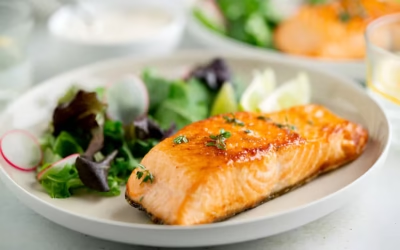
Morey’s Salmon Air Fryer: Perfectly Cooked Frozen Salmon
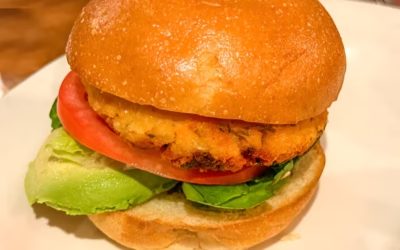
Trader Joe’s Salmon Burger Air Fryer: Quick and Easy Guide
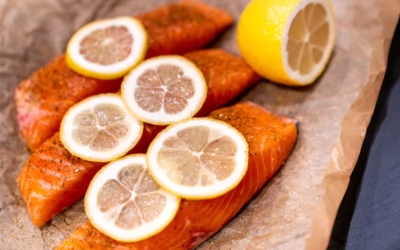
Air Fryer Lemon Pepper Salmon: Quick & Easy Weeknight Dinner
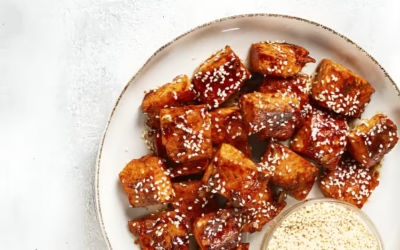
Easy Air Fryer Bang Bang Salmon Bites Recipe
Air Fry Sockeye Salmon: Perfect Wild Alaskan Salmon
Ninja Air Fryer Salmon: Perfect Results in 10 Minutes