When you’re asking how long to cook salmon in the air fryer, you’re seeking one of the most important pieces of information for perfect results. The answer isn’t just one number—it depends on thickness, temperature, whether it’s fresh or frozen, and your desired doneness. This comprehensive guide will answer all your questions about air fryer salmon cooking time so you can achieve restaurant-quality fish every single time.
Quick Answer: How Long to Cook Salmon in Air Fryer
At 400°F (recommended temperature):
- Thin fillets (½-¾ inch): 6-7 minutes
- Medium fillets (1 inch): 8-9 minutes
- Thick fillets (1½ inches): 10-11 minutes
For frozen salmon: Add 3-5 minutes to fresh times
Target internal temperature: 145°F (fully cooked) or 135-140°F (medium)
The golden rule: It’s always better to check early and add time than to overcook.
Understanding Air Fryer Salmon Cooking Times
Before we dive into specific salmon in air fryer time details, let’s understand what affects cooking duration and why timing matters so much.
Why Timing Matters for Air Fryer Salmon
Unlike forgiving proteins like chicken thighs or pork shoulder, salmon has a narrow window of perfection:
Undercooked salmon:
- Center may be raw or translucent
- Food safety concerns
- Unpleasant texture
Perfectly cooked salmon:
- Moist and flaky interior
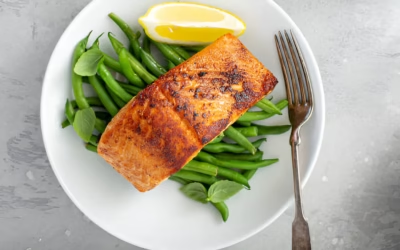
- Lightly crisp exterior
- Safe internal temperature
- Restaurant-quality texture
Overcooked salmon:
- Dry and tough
- Falls apart excessively
- Loss of flavor and moisture
- Cannot be fixed
The difference? Often just 1-2 minutes, which is why understanding how long does salmon take in the air fryer is critical.
What Affects Cooking Time
Five main factors determine how long salmon takes in air fryer:
- Thickness (most important)
- Temperature (375°F vs. 400°F vs. 425°F)
- Fresh vs. frozen
- Desired doneness
- Air fryer model
Complete Timing Chart: How Long to Cook Salmon in Air Fryer
Fresh Salmon Cooking Times
At 400°F (Recommended Temperature):
| Thickness | Cook Time | Check At | Best For |
|---|---|---|---|
| ½ inch | 6-7 min | 5 min | Tail pieces, thin cuts |
| ¾ inch | 7-8 min | 6 min | Standard grocery store fillets |
| 1 inch | 8-9 min | 7 min | Most common, center cuts |
| 1¼ inch | 9-10 min | 8 min | Premium cuts, thick fillets |
| 1½ inch | 10-11 min | 9 min | Extra thick, whole sides |
| 2 inch | 12-14 min | 10 min | Very thick (consider butterflying) |
At 375°F (Lower Temperature):
| Thickness | Cook Time | Why Use This Temp |
|---|---|---|
| ½ inch | 8-9 min | Delicate glazes |
| ¾ inch | 9-10 min | More control |
| 1 inch | 10-12 min | Less risk of burning |
| 1½ inch | 12-14 min | Even cooking for thick pieces |
At 390°F (Common Alternative):
| Thickness | Cook Time | Notes |
|---|---|---|
| ½ inch | 6-8 min | Good for Asian-style marinades |
| 1 inch | 8-10 min | Slightly gentler than 400°F |
| 1½ inch | 10-12 min | Good middle ground |
At 425°F (High Temperature):
| Thickness | Cook Time | Caution |
|---|---|---|
| ½ inch | 5-6 min | Watch very carefully |
| 1 inch | 7-8 min | Risk of burning exterior |
| 1½ inch | 9-10 min | Only for experienced cooks |
Most Recommended: 400°F offers the best balance of speed, control, and crispy results.
Frozen Salmon Cooking Times
Method 1: Direct Cook from Frozen (400°F)
| Fresh Thickness | Frozen Cook Time | Notes |
|---|---|---|
| ½-¾ inch | 9-11 min | Watch last 2 minutes |
| 1 inch | 11-14 min | Most predictable |
| 1½ inch | 13-16 min | May need extra time |
Method 2: Two-Step Process (Recommended for Best Results)
Step 1 – Thaw:
- Temperature: 360°F
- Time: 7 minutes
- Result: Fully thawed salmon
Step 2 – Cook:
- Temperature: 400°F
- Time: Use fresh salmon times (6-11 minutes)
- Total time: 13-18 minutes
Comparison:
- Direct method: 11-16 minutes (faster but less control)
- Two-step method: 13-18 minutes (better texture and crust)
Salmon Bites/Cubes Cooking Times
1-Inch Cubes at 400°F:
- Fresh: 5-8 minutes (flip at 3-4 minutes)
- Frozen: 8-10 minutes (flip at 5 minutes)
- Best for: Bowls, salads, appetizers
½-Inch Cubes at 400°F:
- Fresh: 4-6 minutes (flip at 2-3 minutes)
- Frozen: 6-8 minutes (flip at 4 minutes)
- Best for: Kids, quick meals
Pro Tip: Smaller pieces cook much faster—watch them carefully!
Temperature and Time Combinations: Finding Your Perfect Match
360°F: Gentle and Safe
When to use: Thawing frozen salmon, very delicate glazes Pros: Lowest risk of burning, even cooking Cons: Takes longest time Best for: Beginners, sugar-heavy marinades
Timing for 1-inch fillet: 10-12 minutes
375°F: Balanced Approach
When to use: Thick fillets, honey glazes, more control Pros: Good balance, less stress Cons: Not as crispy as 400°F Best for: Glazed salmon, thick cuts
Timing for 1-inch fillet: 9-11 minutes
390-400°F: The Sweet Spot (RECOMMENDED)
When to use: Most everyday cooking Pros: Crispy exterior, moist interior, perfect timing Cons: Need to watch timing carefully Best for: 90% of recipes
Timing for 1-inch fillet: 8-9 minutes
425°F: Quick and Crispy
When to use: When you want maximum crust Pros: Very crispy, fastest cooking Cons: Easy to overcook, risk of burning Best for: Experienced cooks, simple seasonings
Timing for 1-inch fillet: 6-7 minutes
Step-by-Step Timing Guide for Perfect Salmon
Total Time Breakdown (For 1-Inch Fillet at 400°F)
Preparation Phase: 3-5 minutes
- Minute 0-2: Remove salmon from fridge, pat dry thoroughly
- Minute 2-3: Season or apply marinade
- Minute 3-5: Preheat air fryer to 400°F
Cooking Phase: 8-9 minutes
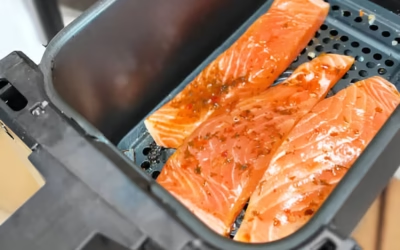
- Minute 0: Place salmon in basket, close air fryer
- Minute 0-7: Don’t open (resist temptation!)
- Minute 7: Check with thermometer or visual cues
- Minute 7-9: Add 1-2 minutes if needed
Resting Phase: 3-5 minutes
- Minute 0-1: Remove from air fryer, transfer to plate
- Minute 1-5: Let rest (temperature rises 5-10°F)
Total time from fridge to table: 14-19 minutes
Detailed Minute-by-Minute Guide
For 8-Minute Cook (Standard 1-Inch Fillet):
Minutes 0-2:
- Air fryer closed
- Exterior begins heating
- Surface moisture evaporating
- Internal temp: 40-60°F (still cold)
Minutes 2-4:
- Maillard reaction starting
- Light browning begins
- Internal temp: 80-100°F
- Fish still raw in center
Minutes 4-6:
- Visible browning on top
- Edges starting to crisp
- Internal temp: 110-120°F
- Center warming but not done
Minutes 6-8:
- Golden crust forming
- Edges crispy
- Internal temp: 130-145°F
- Almost done or perfectly done
Minute 8:
- CHECK NOW!
- Should be 135-145°F internally
- Flakes easily with fork
- Remove if done, add 1-2 minutes if not
Minutes 9-10 (if needed):
- Add only if undercooked
- Check every 30 seconds
- Risk of overcooking increases
Visual Timeline: How Salmon Cooks in Air Fryer
Understanding what salmon looks like at different time markers helps you know how long to air fry salmon:
At 3 Minutes (All Thicknesses)
Visual:
- Surface starting to dry
- No color change yet
- Still appears raw
What’s happening:
- Exterior heating rapidly
- Center still cold
- Proteins beginning to denature
Action: Don’t open yet
At 5 Minutes (Thin Fillets)
Visual:
- Light golden color appearing
- Edges whitening
- Top less translucent
Temperature:
- 120-130°F in thin pieces
- Ready to check thin fillets
Action: Check ½-inch fillets now
At 7 Minutes (Medium Fillets)
Visual:
- Golden brown developing
- Edges crisping
- Center opaque in 1-inch fillets
Temperature:
- Should be 130-140°F for 1-inch
Action: Check 1-inch fillets now
At 9 Minutes (Thick Fillets)
Visual:
- Well-browned exterior
- Some white protein (albumin) may appear
- Flakes easily
Temperature:
- Should be 140-145°F for 1½-inch
Action: Check thick fillets now
At 11+ Minutes
Visual:
- Risk: Very brown or burning
- May be dry if overcooked
Temperature:
- Likely 150°F+ (overcooked)
Action: Avoid going this long unless very thick
Factors That Change Cooking Time
1. Thickness (Most Important Variable)
How to measure:
- Use a ruler at thickest part
- Round up if between measurements
- Different thickness = different time
Every ¼ inch of thickness adds approximately 1-1.5 minutes of cooking time.
Example:
- ¾ inch thick: 7-8 minutes
- 1 inch thick: 8-9 minutes
- 1¼ inch thick: 9-10 minutes
2. Starting Temperature
Room Temperature (20-25°C):
- Standard cook times apply
- Most even cooking
- Recommended to let sit 15-20 minutes
Cold from Fridge (4°C):
- Add 30 seconds to 1 minute
- Still perfectly fine to cook
- Most common method
Frozen Solid (-18°C):
- Add 3-5 minutes to fresh times
- OR use two-step thaw method
- Plan extra time
3. Desired Doneness
Rare (120-125°F):
- Reduce time by 2-3 minutes
- Only for sushi-grade salmon
- Translucent center
Medium-Rare (125-130°F):
- Reduce time by 1-2 minutes
- Slightly translucent center
- Very moist
Medium (135-140°F):
- Standard times work
- Remove at 135°F, rest to 140°F
- Perfect balance
Well Done (145-150°F):
- Use full recommended times
- USDA recommended
- Opaque throughout
4. Salmon Type and Fat Content
Atlantic Salmon (Most Common):
- Standard cook times
- Higher fat = more forgiving
- Farm-raised typically
King/Chinook Salmon:
- Same cook times
- Very high fat content
- Most expensive, most forgiving
Sockeye Salmon:
- Same cook times
- Lower fat content
- Watch more carefully (can dry out faster)
Coho Salmon:
- Standard cook times
- Medium fat content
- Good middle ground
Steelhead Trout:
- Same as salmon
- Similar fat content
- Cooks identically
5. Skin-On vs. Skinless
Skin-On:
- Standard cook times
- Skin protects flesh
- May add 30 seconds for crispy skin
- Place skin-side down
Skinless:
- Same cook times
- Slightly higher risk of drying
- Watch last minute carefully
- More delicate handling
6. Fresh vs. Previously Frozen
Never Frozen (Fresh):
- Best texture
- Standard cook times
- Most expensive
Previously Frozen (Thawed):
- Same cook times
- May release more moisture
- Pat extra dry before cooking
- Most common in stores
Currently Frozen:
- Add 3-5 minutes
- See frozen timing chart above
Recipe-Specific Timing Adjustments
Different recipes and flavors require slight timing modifications:
Classic Garlic Herb Salmon
Temperature: 400°F Time: 8-9 minutes (1-inch) Adjustment: None needed Notes: Simple seasonings, standard timing
Honey Dijon Glazed Salmon
Temperature: 400°F Time: 6 minutes plain + 2-3 minutes with glaze Adjustment: Apply glaze at 6 minutes Notes: Prevents burning while ensuring caramelization
Teriyaki Salmon
Temperature: 390°F (slightly lower) Time: 8-10 minutes Adjustment: Brush sauce halfway through Notes: Sugar in teriyaki can burn at 400°F
Cajun Blackened Salmon
Temperature: 400°F Time: 8 minutes (1-inch) Adjustment: None, but watch spices Notes: Cornstarch in rub creates extra crisp
Maple Mustard Salmon
Temperature: 375-390°F (lower) Time: 9-11 minutes Adjustment: Lower temp prevents maple burning Notes: High sugar content requires adjustment
Lemon Pepper Salmon
Temperature: 400°F Time: 8-9 minutes Adjustment: Add lemon slices on top Notes: Standard timing, simple flavors
Asian-Style Salmon Bites
Temperature: 390°F Time: 5-8 minutes (flip at 3-4 min) Adjustment: Smaller pieces cook faster Notes: Marinade adds moisture, may take slightly longer
Whether you’re making these recipes or experimenting with your own flavors, understanding the timing fundamentals is key. For more creative variations and detailed recipe instructions at different cook times, check out these air fryer salmon recipes that showcase how timing adjustments work with different marinades and preparations.
Buffalo Salmon
Temperature: 400°F Time: 8 minutes + 1-2 minutes with sauce Adjustment: Toss in buffalo sauce after cooking Notes: Prevents burning butter in sauce
Common Timing Questions Answered
How long does it take to cook salmon in an air fryer?
Quick answer: 6-11 minutes at 400°F depending on thickness
Detailed answer:
- Thin pieces (½-¾ inch): 6-8 minutes
- Medium pieces (1 inch): 8-9 minutes
- Thick pieces (1½ inch): 10-11 minutes
- Very thick (2 inch): 12-14 minutes
How do you know when salmon is done in the air fryer?
Three reliable methods:
- Temperature (BEST):
- Insert thermometer in thickest part
- Target: 145°F (fully cooked) or 135-140°F (medium)
- Most accurate method
- Fork Test:
- Gently press with fork
- Should flake easily
- Center should be slightly firm
- Visual:
- Opaque throughout (not translucent)
- Light golden brown on top
- Some white protein (albumin) may appear
How long to cook 1 lb of salmon in air fryer?
Depends on configuration:
One 1-lb whole piece:
- Thickness: Usually 1-1.5 inches
- Time: 10-12 minutes at 400°F
- Check thickest part
Four 4-oz portions:
- Thickness: Usually 1 inch
- Time: 8-9 minutes at 400°F
- May fit in one batch
Key: Weight matters less than thickness for timing
How long for salmon to cook in air fryer if very thin?
For ½-inch or thinner fillets:
- Time: 5-6 minutes at 400°F
- Check at: 4 minutes
- Risk: Very easy to overcook
- Tip: Consider 375°F for more control
How long does thick salmon take in air fryer?
For 1½-inch to 2-inch fillets:
- Option 1: 10-14 minutes at 400°F
- Option 2: Butterfly to 1 inch thick, cook 8-9 minutes
- Option 3: Cook at 375°F for 12-15 minutes (more even)
- Best method: Two-zone (start lower, finish higher)
Timing Mistakes and How to Avoid Them
Mistake 1: Not Checking Early Enough
Problem: Salmon overcooks before you check Solution: Always check at minimum time Example: For 1-inch fillet, check at 7 minutes, not 9
Mistake 2: Relying Only on Time
Problem: Air fryers vary, fillets vary Solution: Use time as guide + thermometer for accuracy Investment: $15-30 instant-read thermometer
Mistake 3: Using Same Time for All Thicknesses
Problem: Thin pieces overcook, thick pieces undercook Solution: Measure thickness, adjust time accordingly Tool: Simple ruler or measuring tape
Mistake 4: Opening Air Fryer Multiple Times
Problem: Each opening adds 30-60 seconds to cook time Solution: Check only once at minimum time Impact: Three openings can add 2-3 minutes
Mistake 5: Not Preheating
Problem: Adds 2-3 minutes to cook time, uneven cooking Solution: Always preheat 3-5 minutes Result: More predictable timing
Mistake 6: Ignoring Carryover Cooking
Problem: Salmon continues cooking after removal Solution: Remove at 135-140°F, let rise to 145°F Timing: Rest 3-5 minutes
Mistake 7: Cooking from Frozen Without Adjusting Time
Problem: Raw center with cooked exterior Solution: Add 3-5 minutes OR use two-step method Better option: Two-step for consistent results
How to Adjust Timing for Your Specific Air Fryer
Not all air fryers cook identically. Here’s how to calibrate how long it takes to cook salmon in air fryer for YOUR specific model:
First-Time Calibration Test
Test run with 1-inch fillet at 400°F:
- Start: Set timer for 7 minutes (1 minute less than recommended)
- Check: At 7 minutes, insert thermometer
- Assess:
- If 120-130°F: Add 2 minutes
- If 130-140°F: Add 1 minute
- If 140-145°F: Perfect! Your time is 7 minutes
- If 145°F+: Your air fryer runs hot, use 6 minutes next time
- Record: Write down exact time it took to reach 135-145°F
- Future: Use this as your baseline for 1-inch fillets
Creating Your Personal Timing Chart
Fill this out after a few cooking sessions:
My Air Fryer: _________________ (brand/model)
| Fillet Size | My Time at 400°F | Notes |
|---|---|---|
| ½ inch | _____ min | |
| ¾ inch | _____ min | |
| 1 inch | _____ min | |
| 1¼ inch | _____ min | |
| 1½ inch | _____ min | |
| Frozen (1 inch) | _____ min |
After 3-4 sessions, you’ll know your exact times!
Common Air Fryer Variations
Basket-Style (Ninja, Cosori, Phillips):
- Most common type
- Standard times usually accurate
- Good air circulation
Oven-Style (Breville, Cuisinart):
- May cook 1-2 minutes faster
- Excellent air circulation
- Check early first time
Toaster Oven Air Fryer:
- May take 1-2 minutes longer
- Less powerful convection
- Add time as needed
Large Capacity (7+ quarts):
- Standard times work
- Can cook more at once
- Don’t overcrowd
Small Capacity (2-3 quarts):
- Standard times work
- Limited to 1-2 small fillets
- May cook slightly faster
Advanced Timing Techniques
The Pull-and-Rest Method
For perfect medium salmon:
- Cook at 400°F for 6-7 minutes
- Check temp: should be 125-130°F
- Remove and rest 5 minutes
- Final temp: 135-140°F
- Result: Perfect medium doneness
The Reverse-Sear Technique
For very thick fillets (2+ inches):
- Cook at 275°F for 10-12 minutes
- Increase to 400°F for 2-3 minutes
- Total time: 12-15 minutes
- Result: Even doneness with crispy top
The Interval Check Method
For beginners afraid of overcooking:
- Set timer for half the recommended time
- Check progress (don’t remove)
- Set for remaining time
- Check at 80% of total time
- Adjust final minutes as needed
Example for 8-minute cook:
- Check at 4 minutes (visual only)
- Check at 6 minutes (with thermometer)
- Add final 1-2 minutes if needed
The Touch Test
For experienced cooks (no thermometer):
- Rare: Soft, like touching your cheek
- Medium-rare: Slight resistance, like chin
- Medium: Some resistance, like nose tip
- Well done: Firm, like forehead
Timing based on touch:
- Start checking at minimum time
- Use touch to decide if done
- Add 1-2 minutes if too soft
Timing for Special Situations
Multiple Fillets of Different Sizes
Strategy:
- Calculate time for thickest fillet
- Start all together
- Remove thinner ones early
- Continue with thicker ones
Example:
- 1-inch fillet needs 8 minutes
- ¾-inch fillet needs 7 minutes
- Cook both for 7 minutes
- Remove thin one
- Cook thick one 1 more minute
Cooking for a Crowd (Batches)
First batch: Full recommended time (8 minutes) Second batch: Reduce by 1 minute (7 minutes) Why: Basket stays hot between batches
Keep first batch warm:
- Place in oven at 200°F
- Tent with foil
- Serve second batch first (hottest)
Meal Prep (Multiple Days)
Batch cook strategy:
- Cook all fillets to 135-140°F (slightly underdone)
- Cool quickly
- Refrigerate up to 3 days
- Reheat: 350°F for 3-4 minutes
- Total original cook time: Reduce by 1 minute
High Altitude Cooking
Above 3,000 feet:
- Add 1-2 minutes to cook time
- Water boils at lower temperature
- Proteins cook differently
Above 6,000 feet:
- Add 2-3 minutes
- May need lower temperature (375°F)
Troubleshooting Timing Issues
“My salmon is always dry”
Likely causes:
- Cooking too long
- Not removing at 135°F
- Fillet is too thin
Solutions:
- Reduce time by 1-2 minutes
- Use thermometer, remove earlier
- Check at minimum time
- Consider fattier salmon (Atlantic)
“My salmon is undercooked in the middle”
Likely causes:
- Fillet too thick
- Started frozen
- Not enough time
Solutions:
- Add 2-3 minutes
- Use two-step method for frozen
- Butterfly very thick pieces
- Check with thermometer
“Timing is inconsistent”
Likely causes:
- Varying fillet thickness
- Not preheating
- Opening air fryer too often
Solutions:
- Measure each fillet
- Always preheat 3-5 minutes
- Check only once
- Keep timing notes
“Salmon cooks too fast”
Likely causes:
- Air fryer runs hot
- Fillets are very thin
- Temperature too high
Solutions:
- Reduce time by 1-2 minutes
- Lower temp to 375°F
- Check earlier (at 5 minutes)
“Salmon takes forever”
Likely causes:
- Air fryer underpowered
- Not preheating
- Fillets very thick
Solutions:
- Increase temperature to 425°F
- Always preheat
- Butterfly thick pieces
- Consider new air fryer if very old
Perfect Timing Checklist
Before Cooking:
□ Measure fillet thickness at thickest point □ Pat salmon completely dry with paper towels □ Calculate cook time based on thickness □ Preheat air fryer to chosen temperature (3-5 min) □ Spray basket or line with foil □ Have instant-read thermometer ready
During Cooking:
□ Place salmon in basket (don’t overcrowd) □ Set timer for MINIMUM recommended time □ Don’t open air fryer until timer goes off □ Check temperature at minimum time □ Add 1-2 minutes if needed □ Recheck if time added
After Cooking:
□ Remove at 135-145°F internal temperature □ Transfer to plate immediately □ Let rest 3-5 minutes (temperature will rise) □ Check final temperature (should be 145°F) □ Serve and enjoy!
FAQs: How Long to Cook Salmon in the Air Fryer
How long should you cook salmon in the air fryer?
6-11 minutes at 400°F depending on thickness. Thin (½-¾ inch) takes 6-7 minutes, medium (1 inch) takes 8-9 minutes, and thick (1½ inch) takes 10-11 minutes.
How long does salmon need to cook in air fryer?
At minimum, until it reaches 135°F internal temperature (will rise to 145°F while resting). This typically takes 6-11 minutes at 400°F depending on thickness.
How long do you cook salmon in the air fryer at 400?
8-9 minutes for standard 1-inch thick fillets. Check at 7 minutes and add time if needed. Target 135-145°F internal temperature.
How long to cook frozen salmon in air fryer?
11-14 minutes at 400°F for 1-inch frozen fillets (direct method), OR 7 minutes at 360°F to thaw + 8-9 minutes at 400°F to cook (two-step method, recommended).
How long for salmon bites in air fryer?
5-8 minutes at 400°F for 1-inch cubes. Flip halfway through at 3-4 minutes for even browning.
Can you overcook salmon in air fryer?
Yes, very easily! Just 1-2 extra minutes can dry out salmon. Always use a thermometer and remove at 135-145°F.
Do you flip salmon in air fryer?
No for regular fillets. Yes for salmon bites/cubes (flip halfway through).
How do you know when air fryer salmon is done?
Use an instant-read thermometer (most accurate, target 135-145°F) OR check if it flakes easily with a fork and is opaque throughout.
Why does my salmon cook unevenly?
Common causes: Different thickness parts, overcrowded basket, not preheated, or inconsistent fillet size. Solution: Choose even-thickness fillets, leave space between pieces, preheat properly.
How long to cook salmon at 375 in air fryer?
Add 1-3 minutes to standard times. For 1-inch fillet: 9-11 minutes instead of 8-9 minutes.
Conclusion: Mastering Salmon Timing in Air Fryer
Understanding how long to cook salmon in the air fryer is the key to consistent, restaurant-quality results. While the specific time varies based on thickness, temperature, and your preferences, the principles remain the same: measure your fillet, choose your temperature (400°F recommended), check at the minimum time, and use a thermometer for perfect results.
Quick Reference Guide:
Standard Times at 400°F:
- ½-¾ inch: 6-7 minutes
- 1 inch: 8-9 minutes
- 1½ inch: 10-11 minutes
- Frozen: Add 3-5 minutes
Key Success Factors: ✅ Measure thickness accurately ✅ Pat salmon completely dry ✅ Preheat air fryer 3-5 minutes ✅ Check at minimum time first ✅ Use instant-read thermometer ✅ Remove at 135-145°F ✅ Let rest 3-5 minutes
Remember:
- When in doubt, check early (can’t undo overcooking)
- Thickness is more important than weight
- Every air fryer is slightly different
- Keep a timing log for your specific model
- Temperature continues rising while resting
The Bottom Line: For a standard 1-inch thick salmon fillet at 400°F, 8-9 minutes is your target. Check at 7 minutes with a thermometer, and you’ll have perfect salmon every single time. As you gain experience with your specific air fryer, you’ll develop an intuition for timing, but these guidelines will ensure success from your very first attempt.
Start cooking, take notes on what works for your air fryer, and soon you’ll be making perfect salmon without even thinking about the timing!
You May Also Like
Air Fryer Pesto Salmon: Quick and Flavorful Weeknight Dinner
Air Fry Salmon and Broccoli: Quick and Healthy One-Pan Dinner
Morey’s Salmon Air Fryer: Perfectly Cooked Frozen Salmon
Trader Joe’s Salmon Burger Air Fryer: Quick and Easy Guide
Air Fryer Lemon Pepper Salmon: Quick & Easy Weeknight Dinner
Easy Air Fryer Bang Bang Salmon Bites Recipe
Air Fry Sockeye Salmon: Perfect Wild Alaskan Salmon
Ninja Air Fryer Salmon: Perfect Results in 10 Minutes