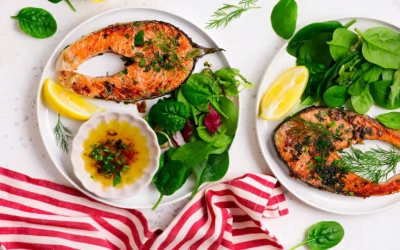
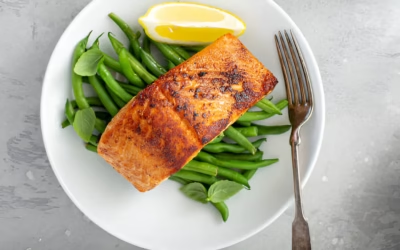
If you’re wondering what temp to cook salmon in air fryer, the answer depends on whether you’re cooking fresh or frozen salmon. For fresh salmon, cook at 390-400°F for 7-9 minutes. For frozen salmon, use 390-400°F for 12-16 minutes total.
These temperatures deliver perfectly cooked salmon with a crispy exterior and moist, flaky interior every time. Getting the temperature right is crucial for air fryer salmon success.
Too low, and you’ll miss that golden crispy exterior. Too high, and you risk drying out this delicate fish. This comprehensive guide breaks down the exact temperatures for every type of salmon preparation, from fresh fillets to frozen patties.
The Best Temperature for Air Fryer Salmon at a Glance
Here’s your quick reference guide for salmon air fryer temperatures:
Fresh salmon fillets:
- Farm-raised Atlantic salmon: 400°F (204°C) for 7-9 minutes
- Wild-caught salmon: 390°F (199°C) for 5-7 minutes (thinner fillets)
- Thick center-cut fillets: 400°F (204°C) for 8-10 minutes
Frozen salmon (no thawing):
- Two-stage method: 390-400°F for 6-9 minutes (thaw), then 5-8 more minutes (cook)
- Single-stage method: 400°F (204°C) for 10-12 minutes total
Salmon patties/cakes:
- Canned salmon patties: 375-400°F for 8-12 minutes
- Frozen patties: 375°F for 12-15 minutes
Reheating cooked salmon:
- Leftover salmon: 350°F (180°C) for 4-5 minutes
These temperatures have been tested across multiple recipes and air fryer models to deliver consistent, delicious results.
Why Temperature Matters for Air Fryer Salmon
Temperature isn’t just a number—it’s the difference between perfectly cooked salmon and dried-out fish. Here’s why it matters:
Temperature affects:
- Moisture retention: Proper heat seals the exterior while keeping interior juicy
- Texture: Right temperature creates crispy skin without overcooking the flesh
- Cooking time: Higher temps cook faster but require careful monitoring
- Fat rendering: Salmon’s natural oils need adequate heat to render properly
- Food safety: Internal temperature must reach 145°F (63°C) for USDA standards
The science behind the numbers: Air fryers work by circulating hot air rapidly around food. For salmon, temperatures between 390-400°F create the ideal environment: hot enough to crisp the exterior quickly while the circulating air cooks the interior gently and evenly. Go below 375°F, and you’ll steam rather than air fry. Go above 425°F, and you risk burning the outside before the inside cooks through.
Temperature Guide by Salmon Type and Preparation
Different salmon preparations require different temperatures. Here’s your complete breakdown:
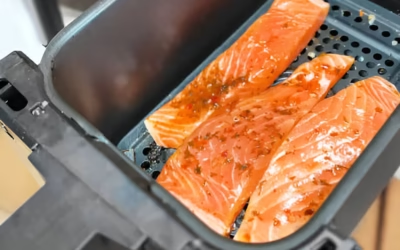
Fresh Salmon Fillets
Standard fresh salmon (1-1.5 inches thick):
- Temperature: 400°F (204°C)
- Time: 7-9 minutes
- Best for: Farm-raised Atlantic salmon with higher fat content
- Result: Crispy exterior, medium doneness (125-135°F internal)
Thin fresh salmon (under 1 inch thick):
- Temperature: 390°F (199°C)
- Time: 5-7 minutes
- Best for: Wild-caught varieties like sockeye
- Result: Evenly cooked without drying out
Thick salmon steaks (over 1.5 inches):
- Temperature: 400°F (204°C)
- Time: 10-12 minutes
- Best for: Center-cut portions, salmon steaks
- Result: Well-cooked center with crispy edges
Frozen Salmon (No Thawing Required)
Frozen salmon – Two-stage method:
- Stage 1 (Thaw): 390°F (199°C) for 6-9 minutes
- Stage 2 (Cook): 390°F (199°C) for 5-8 minutes after seasoning
- Total time: 12-17 minutes
- Best for: Thicker fillets, beginners
- Result: Even cooking with perfect seasoning adherence
Frozen salmon – Single-stage method:
- Temperature: 400°F (204°C)
- Time: 10-12 minutes continuously
- Best for: Standard-thickness fillets, quick meals
- Result: Faster cooking, less hands-on time
Very thick frozen salmon (over 1.5 inches):
- Temperature: 390°F (199°C)
- Two-stage time: 9 minutes + 7-8 minutes
- Single-stage time: 12-14 minutes
- Result: Thorough cooking without burning exterior
Salmon Patties and Cakes
Fresh salmon patties:
- Temperature: 375-400°F
- Time: 8-12 minutes, flipping halfway
- Sweet spot: 390°F for 10-12 minutes
- Result: Golden, crispy exterior with tender interior
Frozen pre-made salmon patties:
- Temperature: 375°F (190°C)
- Time: 12-15 minutes
- Result: Heated through with crispy coating
For even more creative ways to prepare salmon in your air fryer at the perfect temperature, explore these air fryer salmon recipes featuring unique seasonings and cooking techniques.
Preheating: Do You Need It?
The preheating debate is common among air fryer users. Here’s what you need to know for salmon:
When to preheat:
- Fresh salmon fillets: Preheat for 3-5 minutes for best crisping
- Marinated salmon: Preheating helps caramelize glazes
- Thin fillets: Preheat to ensure quick, even cooking
- When you want extra crispy skin: Preheat helps skin crisp faster
When you can skip preheating:
- Frozen salmon: No preheating needed for two-stage method
- Salmon patties: Can go straight into cold air fryer
- Thick fillets: Gradual heating prevents exterior burning
- When recipe doesn’t call for it: Many salmon recipes work fine without preheating
How to preheat: Set your air fryer to the desired cooking temperature (usually 400°F) and let it run empty for 3-5 minutes. Your air fryer is ready when it beeps or reaches temperature.
Pro tip: If your air fryer has a preheat function, use it. If not, manual preheating works just as well.
Internal Temperature: The Real Test of Doneness
While cooking temperature matters, the internal temperature of your salmon determines true doneness:
USDA recommended internal temperature:
- 145°F (63°C): Official safe minimum for fish
- Result: Well-done, fully opaque, very firm
- Best for: Pregnant women, immunocompromised individuals
Chef-preferred internal temperatures:
- 125-135°F (52-57°C): Medium-rare to medium
- Result: Slightly translucent center, very moist, tender
- Best for: Maximum flavor and texture
How to check:
- Insert instant-read thermometer into thickest part of fillet
- Don’t touch the skin or pan—read flesh temperature only
- Check in multiple spots if fillet thickness varies
- Remove from air fryer just before target temp (carryover cooking adds 5°F)
Visual doneness cues:
- Color: Transitions from translucent to opaque
- Flaking: Easily separates into flakes when pressed with fork
- Texture: Firm to touch, not mushy
- Juices: Clear, not milky white
- Albumin: Small amounts of white protein are normal; excessive indicates overcooking
How Air Fryer Model Affects Temperature
Not all air fryers heat exactly the same. Understanding your model helps achieve perfect results:
Basket-style air fryers:
- Usually run true to temperature
- Better air circulation = more even cooking
- May need to reduce temp by 10-15°F for thick fillets
- Examples: Ninja, Cosori, Instant Pot Vortex
Oven-style air fryers:
- May run slightly hotter
- More cooking space but potentially less even heating
- Good for cooking multiple fillets
- May need to rotate basket halfway through
- Examples: Cuisinart, Breville
Drawer-style air fryers:
- Compact with efficient heating
- Great for 1-2 salmon fillets
- May cook faster—check 2 minutes early
- Examples: Philips, GoWISE
Multi-function air fryers:
- Temperature accuracy varies by brand
- Always use air fry setting, not bake
- May require experimentation to find sweet spot
- Examples: Ninja Foodi, Instant Pot Duo Crisp
First-time cooking tips:
- Check salmon 2-3 minutes before recipe’s minimum time
- Take notes on actual cooking time for your model
- Adjust temperature up or down by 10°F if needed
- Most importantly, use a thermometer for first few attempts
Temperature Adjustments for Different Thicknesses
Salmon fillet thickness dramatically affects cooking time at any given temperature. Here’s how to adjust:
Thin fillets (0.5-0.75 inches):
- Temperature: 390°F (199°C)
- Why lower: Prevents exterior burning before interior cooks
- Fresh salmon: 5-6 minutes
- Frozen salmon: 8-10 minutes
- Common types: Wild-caught, tail pieces
Standard fillets (1-1.25 inches):
- Temperature: 400°F (204°C)
- Why perfect: Ideal for balanced cooking
- Fresh salmon: 7-9 minutes
- Frozen salmon: 10-12 minutes
- Common types: Most store-bought portions
Thick fillets (1.5-2 inches):
- Temperature: 390-400°F (199-204°C)
- Strategy: Start at 390°F or use two-stage method
- Fresh salmon: 9-12 minutes
- Frozen salmon: 14-17 minutes
- Common types: Center-cut, salmon steaks
Very thick portions (2+ inches):
- Temperature: 380-390°F (193-199°C)
- Strategy: Lower temp prevents burning; consider finishing in regular oven
- Fresh salmon: 12-15 minutes
- Frozen salmon: 16-18 minutes
- Common types: Whole small salmon, extra-thick steaks
Measuring tip: Use a ruler to check thickness at the thickest point. If fillets vary significantly in thickness, separate thin and thick pieces for different cooking batches.
Temperature for Glazed and Marinated Salmon
Glazes and marinades affect optimal cooking temperature due to their sugar content:
Sugar-based glazes (honey, maple, teriyaki):
- Temperature: 390°F (199°C) maximum
- Why lower: Prevents burning and bitter taste
- Application: Apply glaze during final 2-3 minutes
- Watch carefully: Sugar caramelizes quickly at high heat
Oil-based marinades (olive oil, sesame oil):
- Temperature: 400°F (204°C) works fine
- Why safe: Oils tolerate higher heat
- Pat dry: Remove excess oil to prevent smoking
Citrus-based marinades:
- Temperature: 390-400°F (199-204°C)
- Note: Acid can “cook” salmon exterior, reducing needed time
- Don’t over-marinate: 30 minutes maximum
Dry rubs and spice blends:
- Temperature: 400°F (204°C)
- Best practice: Herbs and spices tolerate high heat well
- Exception: Delicate herbs may burn; add after cooking
Honey garlic glaze method: For recipes with honey garlic glaze, use the two-stage method: Air fry at 390°F for 6-7 minutes plain, then brush with glaze and continue for 5-6 more minutes. This prevents the honey from burning while achieving perfect caramelization.
Common Temperature Mistakes and How to Fix Them
Even experienced cooks make these temperature errors. Here’s how to avoid and fix them:
Mistake 1: Using too high temperature
- Problem: Burnt exterior, raw interior
- Fix: Lower to 390°F and add 2-3 minutes to cooking time
- Prevention: Start at recommended temp, increase only if needed
Mistake 2: Not accounting for thickness
- Problem: Overcooked thin portions, undercooked thick portions
- Fix: Separate fillets by thickness; cook in batches
- Prevention: Choose similarly sized fillets when shopping
Mistake 3: Skipping temperature verification
- Problem: Guessing doneness leads to over or undercooking
- Fix: Invest in instant-read thermometer (worth every penny)
- Prevention: Always check internal temp, especially when learning
Mistake 4: Applying same temp to all salmon types
- Problem: Wild-caught overcooks, frozen undercooks
- Fix: Follow specific guidelines for each type
- Prevention: Reference this guide for each preparation
Mistake 5: Forgetting about carryover cooking
- Problem: Salmon overcooks while resting
- Fix: Remove salmon 5°F below target temperature
- Prevention: Account for 5-10°F temperature rise after removing from air fryer
Mistake 6: Cooking straight from refrigerator
- Problem: Cold salmon takes longer, leading to dried exterior
- Fix: Let salmon sit at room temp 10-15 minutes before cooking
- Prevention: Plan ahead; take salmon out while preheating
Temperature Guide for Specific Salmon Varieties
Different salmon species have varying fat content, affecting optimal cooking temperature:
Atlantic Salmon (Farm-raised):
- Fat content: High (10-15%)
- Best temperature: 400°F (204°C)
- Cooking time: 7-9 minutes fresh, 10-12 frozen
- Why: High fat prevents drying; tolerates higher heat
- Result: Rich, buttery texture
Sockeye Salmon (Wild-caught):
- Fat content: Medium (8-10%)
- Best temperature: 390°F (199°C)
- Cooking time: 6-8 minutes fresh, 10-12 frozen
- Why: Leaner than Atlantic; needs gentler heat
- Result: Firm texture, rich color
King/Chinook Salmon:
- Fat content: Very high (15-20%)
- Best temperature: 400°F (204°C)
- Cooking time: 8-10 minutes fresh
- Why: Highest fat content = most forgiving
- Result: Extremely rich and moist
Coho/Silver Salmon:
- Fat content: Medium-low (6-8%)
- Best temperature: 390°F (199°C)
- Cooking time: 6-8 minutes fresh
- Why: Lower fat requires careful cooking
- Result: Mild flavor, delicate texture
Pink Salmon (Canned, for patties):
- Fat content: Low (4-6%)
- Best temperature: 375-390°F for patties
- Cooking time: 8-12 minutes
- Why: Already cooked; just heating and crisping
- Result: Budget-friendly, mild flavor
Altitude Adjustments for Air Fryer Temperature
If you live at high altitude (above 3,000 feet), air fryer temperatures need adjustment:
Why altitude matters:
- Lower air pressure affects heat transfer
- Water evaporates faster, drying food more quickly
- Air fryers may run slightly cooler at altitude
Altitude adjustments:
3,000-5,000 feet:
- Increase temperature by 15°F
- Example: 400°F becomes 415°F
- May need 1-2 minutes extra cooking time
5,000-7,000 feet:
- Increase temperature by 20-25°F
- Example: 390°F becomes 410-415°F
- Add 2-3 minutes to cooking time
Above 7,000 feet:
- Increase temperature by 25-30°F
- Check doneness 2 minutes early (faster moisture loss)
- Consider adding light oil spray for moisture
High-altitude tips:
- Use instant-read thermometer religiously
- Salmon may need slightly less time despite higher temp
- Add extra moisture (lemon slices, light spray) to prevent drying
Frequently Asked Questions About Salmon Air Fryer Temperature
What is the best temperature to cook salmon in an air fryer? For fresh salmon, 400°F (204°C) for 7-9 minutes delivers the best results. For frozen salmon, use 390-400°F for 12-16 minutes total. These temperatures create a crispy exterior while keeping the interior moist.
Should I cook salmon at 350 or 400 in the air fryer? 400°F is better for fresh salmon fillets as it creates a crispy exterior quickly. Use 350°F only when reheating already-cooked salmon or if your salmon has a sugary glaze that might burn at higher temperatures.
Can you cook salmon at 375 in an air fryer? Yes, 375°F works well for salmon patties and is a safer temperature for beginners. However, fresh salmon fillets benefit from the higher heat of 390-400°F for better texture and faster cooking.
How do I know when air fryer salmon is done? Use an instant-read thermometer—145°F (63°C) for USDA standards, or 125-135°F for medium doneness. Visually, salmon should be opaque and flake easily with a fork.
Why is my air fryer salmon dry? Overcooking is the most common cause. Lower your temperature to 390°F, reduce cooking time by 2 minutes, and remove salmon when it reaches 130-135°F internal temperature (it will rise to 140°F while resting).
Does salmon cook faster in an air fryer than an oven? Yes! Air fryers cook salmon 25-30% faster than conventional ovens due to concentrated, circulating heat. What takes 15-18 minutes in the oven takes just 7-9 minutes in an air fryer at the same temperature.
Can I cook salmon from frozen at 400 degrees? Absolutely! Use 400°F for 10-12 minutes total using the single-stage method, or 390°F for 6-9 minutes, then season and cook 5-8 more minutes using the two-stage method.
What temperature kills parasites in salmon? Cooking salmon to 145°F (63°C) kills any parasites. However, commercially frozen salmon has already been frozen to kill parasites per FDA regulations, so proper cooking to 145°F ensures complete food safety.
Is 125°F safe for salmon? While 145°F is the USDA recommendation, many chefs serve salmon at 125-135°F for better texture. This is generally safe for high-quality, previously frozen fish. Pregnant women and immunocompromised individuals should stick to 145°F.
How long does salmon need to rest after air frying? Let salmon rest for 1-2 minutes after removing from the air fryer. This brief rest allows juices to redistribute and the temperature to rise another 5°F through carryover cooking.
Final Thoughts on Air Fryer Salmon Temperature
Mastering what temp to cook salmon in air fryer transforms this potentially tricky fish into a reliable, delicious meal. The golden rule is simple: 400°F for fresh salmon (7-9 minutes), 390-400°F for frozen salmon (12-16 minutes), and 375-390°F for salmon patties (8-12 minutes).
Remember that your specific results depend on multiple factors: salmon thickness, your air fryer model, fillet type, and whether you’re using fresh or frozen fish. Start with the recommended temperatures in this guide, invest in a good instant-read thermometer, and adjust based on your equipment and preferences.
The beauty of air fryer salmon is its flexibility. Once you understand these temperature principles, you can confidently experiment with different seasonings, glazes, and preparations, knowing you’ll achieve perfectly cooked salmon every time. Whether you prefer your salmon at a chef-approved 125°F or the USDA-recommended 145°F, the air fryer gives you precise control to hit your target perfectly.
With this comprehensive temperature guide in your arsenal, you’re ready to cook air fryer salmon like a pro—crispy on the outside, perfectly cooked inside, and absolutely delicious every single time.
You May Also Like
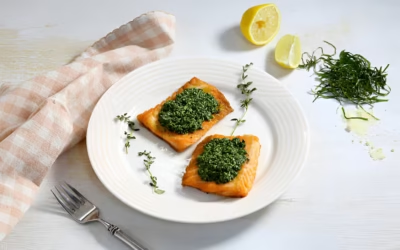
Air Fryer Pesto Salmon: Quick and Flavorful Weeknight Dinner
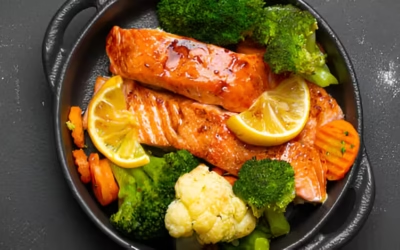
Air Fry Salmon and Broccoli: Quick and Healthy One-Pan Dinner
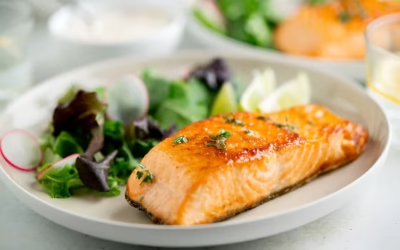
Morey’s Salmon Air Fryer: Perfectly Cooked Frozen Salmon
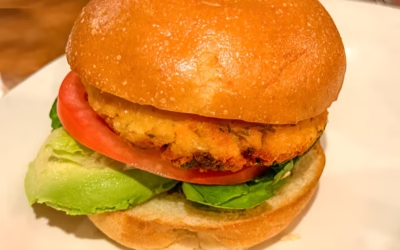
Trader Joe’s Salmon Burger Air Fryer: Quick and Easy Guide
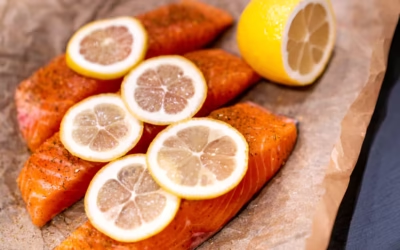
Air Fryer Lemon Pepper Salmon: Quick & Easy Weeknight Dinner
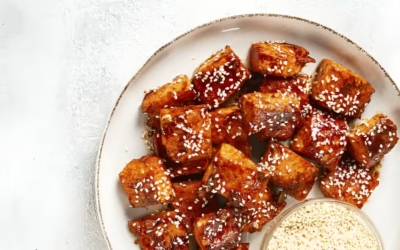
Easy Air Fryer Bang Bang Salmon Bites Recipe
Air Fry Sockeye Salmon: Perfect Wild Alaskan Salmon
Ninja Air Fryer Salmon: Perfect Results in 10 Minutes